

The Radetzky march
The story of a vanished Prague monument in three movements.

Prelude
Prague has voted to return one of the city's most controversial monuments.
More than a century after it was removed from Malostranské náměstí, the statue of Habsburg commander Field Marshal Joseph Radetzky is coming back.
But who exactly was the man behind the bronze? And what does his return say about the Czech Republic today?
First Movement - Missing monument
Malostranske namesti is not somewhere locals linger.
It’s heaving with tourists. It’s somewhere you pass through on the way to somewhere else. Parliament. The British Embassy. Maybe Malostranská beseda.
The tram drivers are unforgiving to those who dart across the tracks rather than use the pedestrian crossings.
So I stand nervously in between the tram lines, listening out for the squeal of metal on metal.
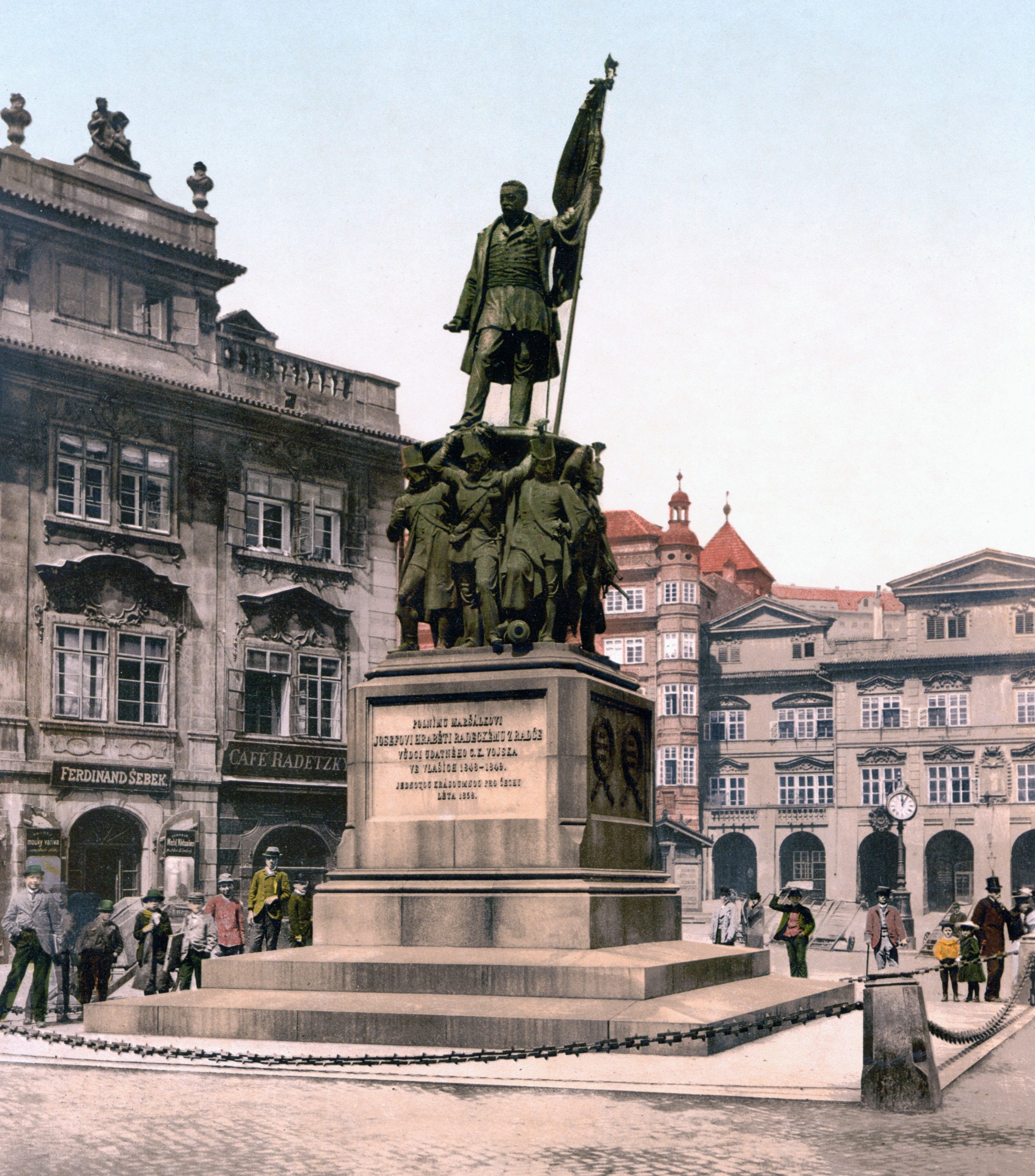
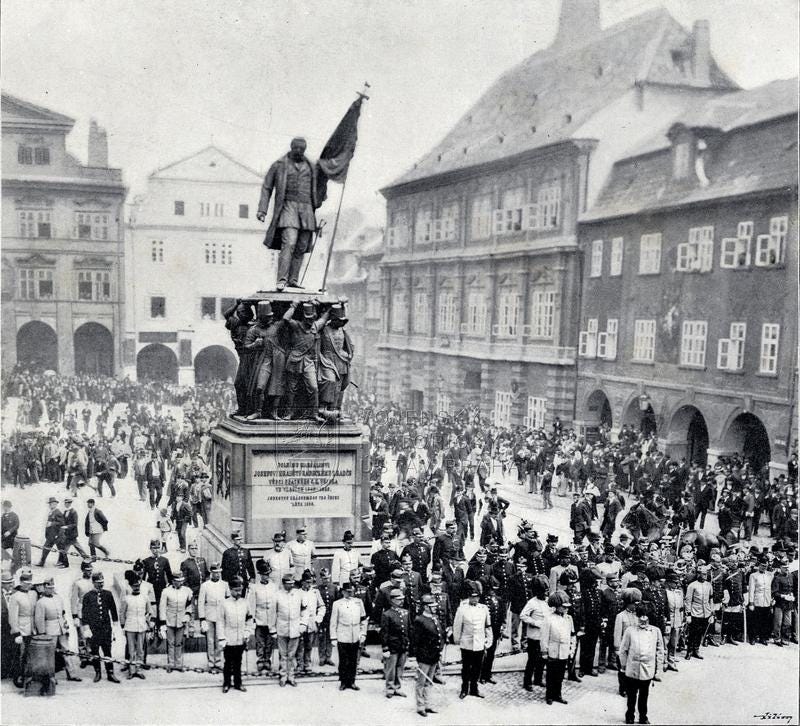
In one hand I’m holding an old photo of the Radetzky monument, unveiled here in 1858 by Emperor Franz Joseph himself. In the other I’m holding my phone, trying to recreate the same shot.
I’m not succeeding.
The perspective is slightly off. It doesn’t help that I’m trying to match what was then ‘Café Radetzky’ with what is now Starbucks. The latter is swathed in a layer of scaffolding.
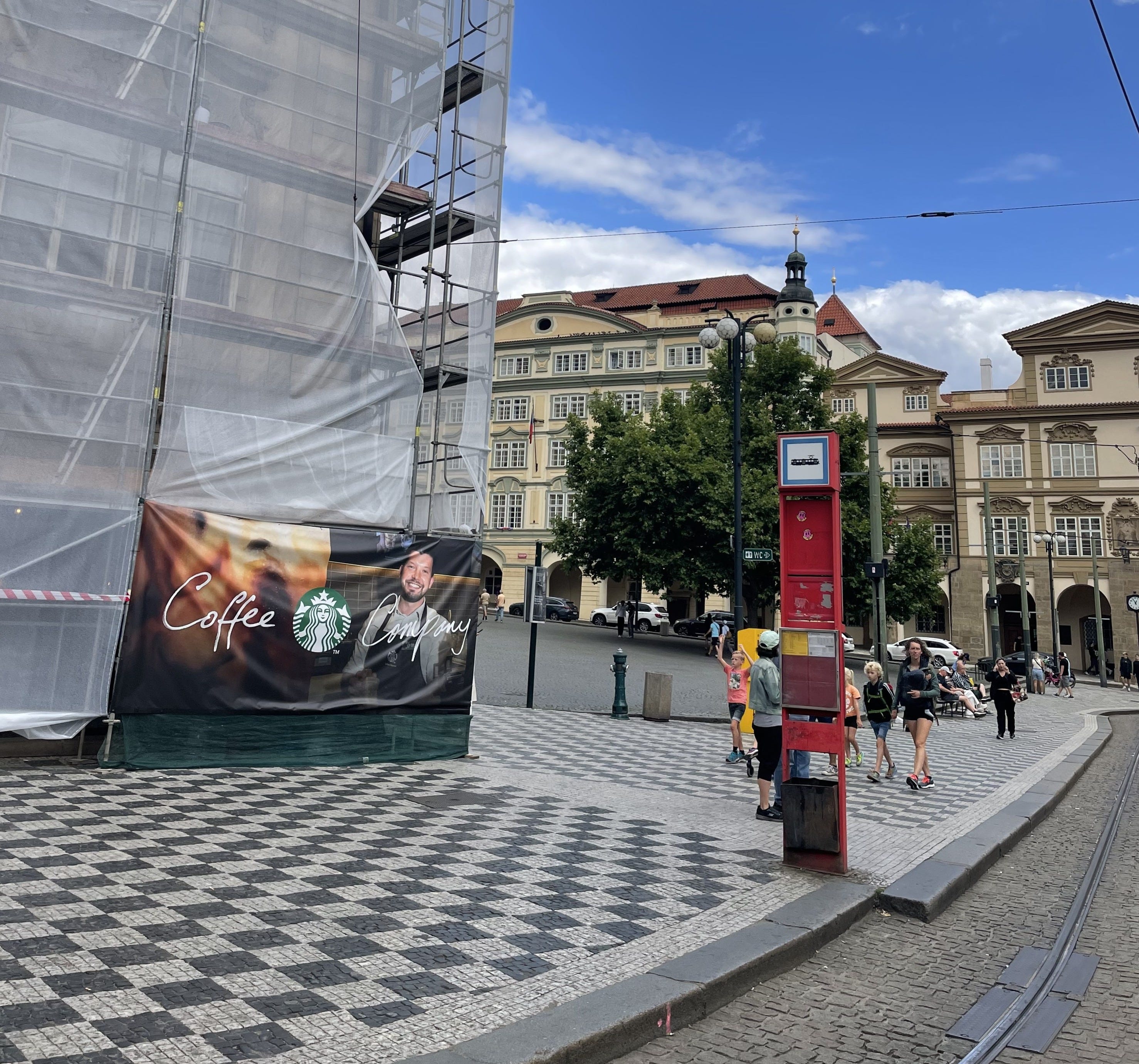
I’m also standing in the wrong spot.
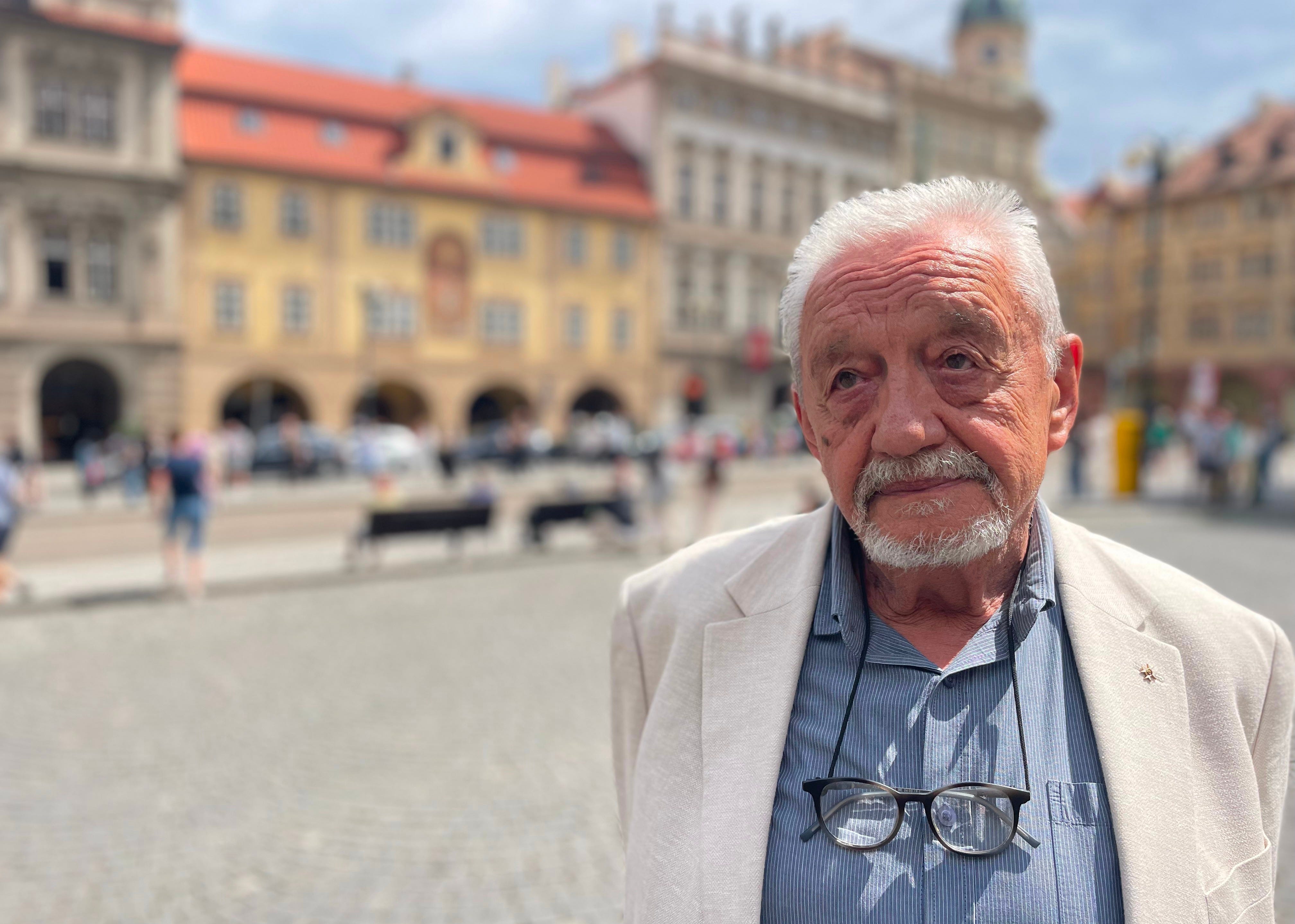
“It was further back, about … there,” said Jan Bárta, the 83-year-old founder and chairman of the Prague Radecký Society, pointing towards the four-globed lamppost on the opposite side of the street.
Jan has made it his life’s mission to return the field marshal to his rightful place.
“Radetzky is part of Czech history. You can’t erase a figure like that without impoverishing this country and this nation,” Jan told me.
“The Czech state didn’t come into being in 1918. Its history stretches back to the 10th century, to the time of St Wenceslas and so on,” he went on.
“It’s evolved over the centuries - sometimes with interruptions, but always as part of a continuous historical journey. We can’t simply forget that history.”
Jan Bárta now stands on the cusp of seeing his dream become reality.
Last month, Prague’s city assembly voted 41-4 to approve the monument’s return to the square.
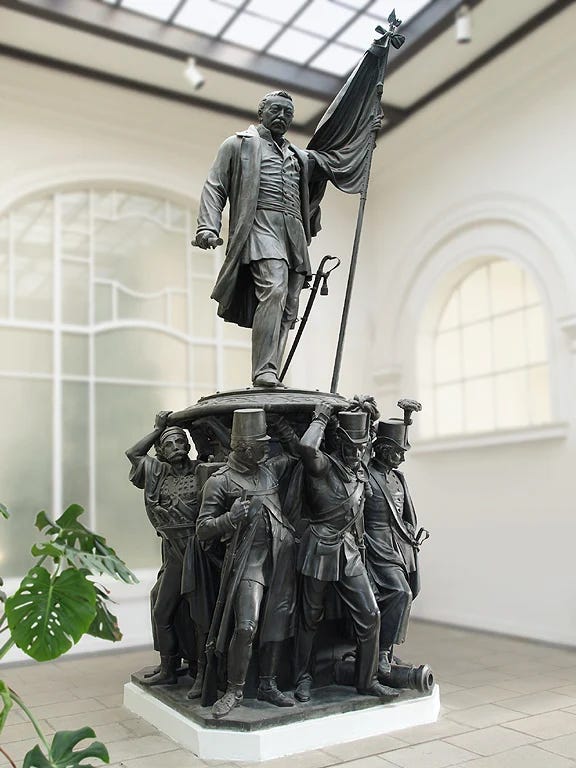
It will stand not in its original position - the tram tracks are in the way - but in the middle of the square instead. Radetzky - borne aloft on a shield carried by eight Habsburg soldiers - will be gazing triumphantly at the tram stop.
All that remains is to decide whether to use the original 10-ton bronze monument - now kept at the Lapidarium of the National Museum - or whether to create a copy.
The museum seems to be somewhat reluctant to part with it.
Second Movement - Empire
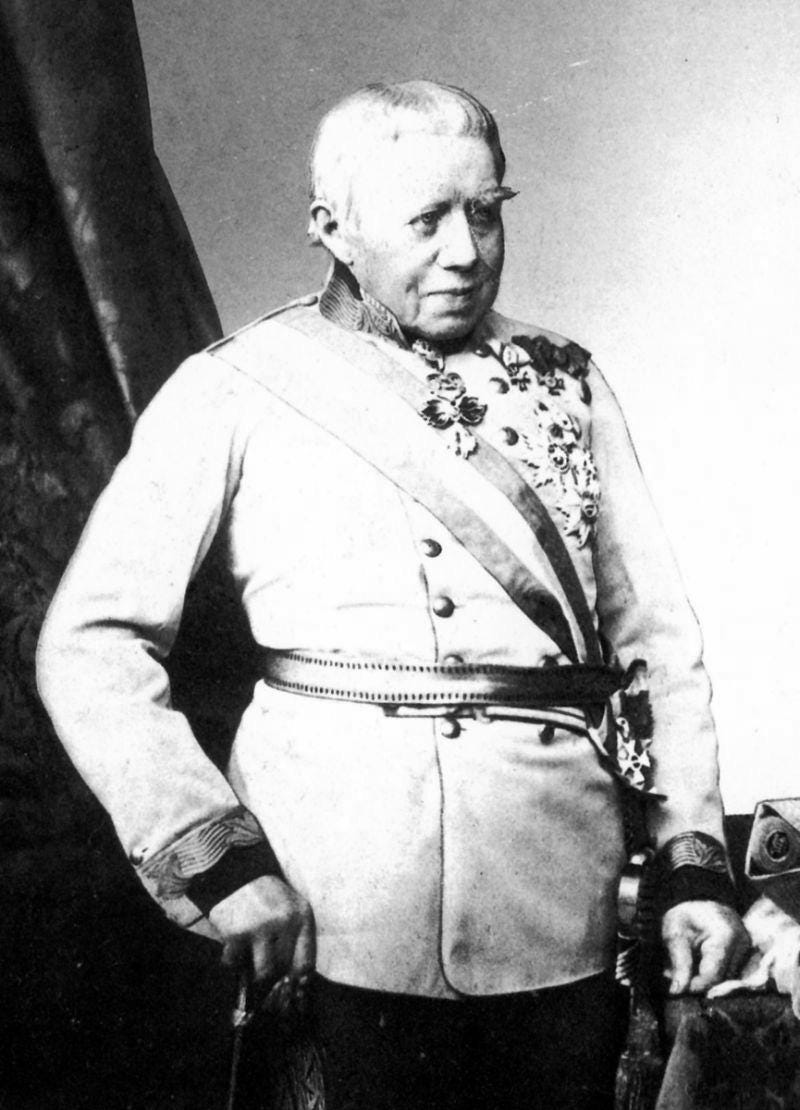
Field Marshal Johann Joseph Wenzel Anton Franz Karl Graf Radetzky von Radetz.
Even his name feels like a challenge.
Was he Czech? German? Austrian? Bohemian?
“I think the first thing he would have said was that he was a loyal servant of the Emperor and the Habsburg family,” said Tomáš Masař, a historian from Charles University.
“I don’t think he would have thought about himself in our perspective of modern history and modern nationalities. That’s something that he and his time didn’t know,” Tomáš told me.
“He was from the Czech lands and, in that sense, was a Bohemian patriot. He was quite proud of his roots. We have several letters in which he writes about his [aristocratic] family’s origins in Bohemia.”
Radetzky, who was orphaned at the age of 10, most likely spoke Czech alongside German in his childhood home of Třebnice chateau, about an hour south of Prague.
But he made his career in Vienna. He was proud to be able to speak the languages of the men - Czech, German, Hungarian, Italian - who served under him.
Radetzky embodied an empire in which language, birthplace and loyalty rarely pointed in the same direction.
Few soldiers were more revered in their own lifetime.
Even today, audiences in Vienna still clap along at New Year’s to Johann Strauss the Elder’s stirring tribute to him (watch this and you will too).
Strauss composed the Radetzky March in the revolutionary year of 1848, to celebrate the imperial army’s famous victory over the Kingdom of Sardinia at the Battle of Custoza - a major setback for the Italian independence movement.
If the Radetzky March became the unofficial anthem of the Habsburgs, then Joseph Roth’s 1932 book of the same name is a poignant, elegiac tale of the empire’s decline and fall.
Roth uses the march as a recurring motif throughout the novel. Every time it’s heard, it reminds the reader of the ideals the empire claims to embody - honour, discipline, continuity - even as those ideals are steadily crumbling.
Third Movement - Republic
“The fundamental argument is that if we live in a democracy, why should we celebrate someone who didn’t believe in one?” said Luboš Rokos, a blogger with a keen interest in history.
“Radetzky was a general, a field marshal, a soldier. He belonged to the age of monarchy. He lived by the values of that era, and there’s nothing wrong with that,” Luboš told me.
“But today’s values are different.”
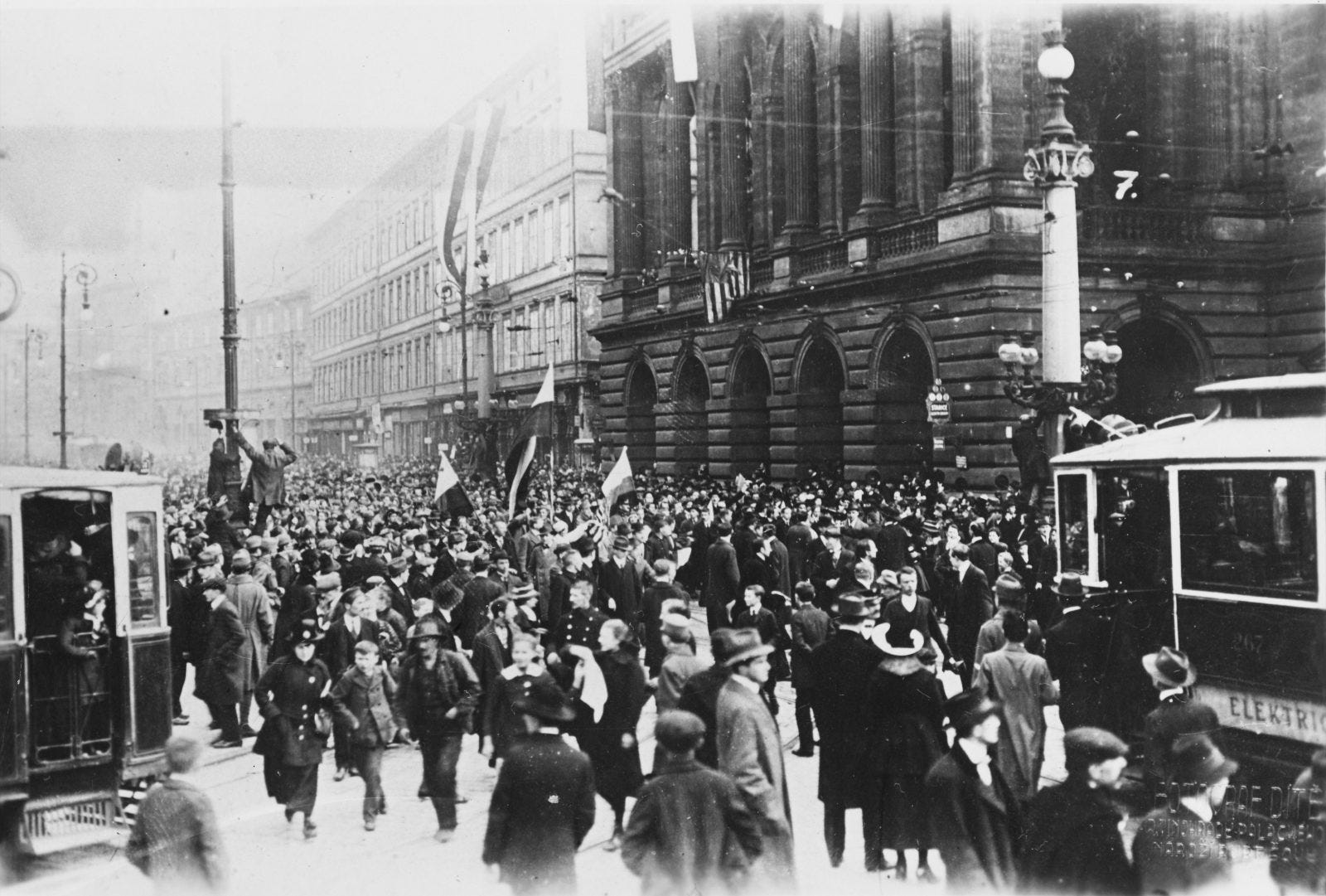
They were different too in 1919, when the newly-created Czechoslovak authorities ordered the monument’s removal.
To the new republic, Radetzky embodied the Habsburg monarchy that Czech politicians had struggled against for decades.
But it was dismantled carefully, unlike the Marian column on the Old Town Square, which was torn down by a mob (a replica was returned in 2020).
The bronze monument of Radetzky has been well preserved, and remains in excellent condition.
Field Marshal Radetzky died on 5 January 1858 in Milan (then still part of the Austrian Empire), aged 91.
He’d been born before the American War of Independence and the French Revolution, and had fought in the Napoleonic wars. Yet he lived long enough to see - and be captured by - the first photographs.
Tomáš Masař pointed to one detail that had surprised him. Among Radetzky’s possessions was a small picture of George Washington.
“That’s not something you’d expect from someone who was simply super-conservative or anti-democratic,” he told me.
“So maybe - and it’s just my interpretation - his personal views were more liberal than his actions.”
Perhaps the last word on Radetzky has yet to be written.
If this story resonated, you might enjoy my essay on the Slovak capital - another journey through the tangled history and identity of Central Europe.
To the castle

Adolf Hitler stood on the banks of the Danube, gazing at a roofless Bratislava Castle.
You might be interested in his resting place
Der Heldenberg - Radetzky Gedenkstätte › Der Heldenberg https://share.google/FiXxspdLc5P1gPZ4U