

To the castle
Homage to Bratislava, the most Central European of cities

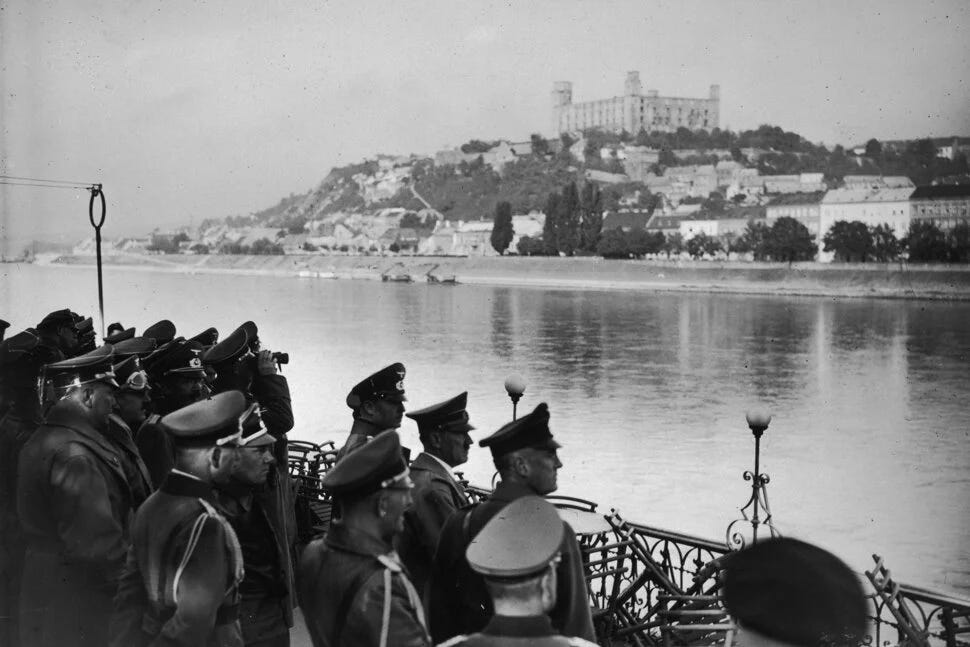
Adolf Hitler stood on the banks of the Danube, gazing at a roofless Bratislava Castle.
“Why is it a ruin?” he is supposed to have asked.
The answer is unrecorded.
Actually there’s no proof Hitler said this. He’s not even looking at the castle in the photo - he appears to be gazing at what was then Štefánik Bridge.
Hitler was certainly there in 1938 - October 25, 1938 to be exact. He was visiting the heavily fortified strip of land on the right bank of the Danube that he’d just annexed from Czechoslovakia.
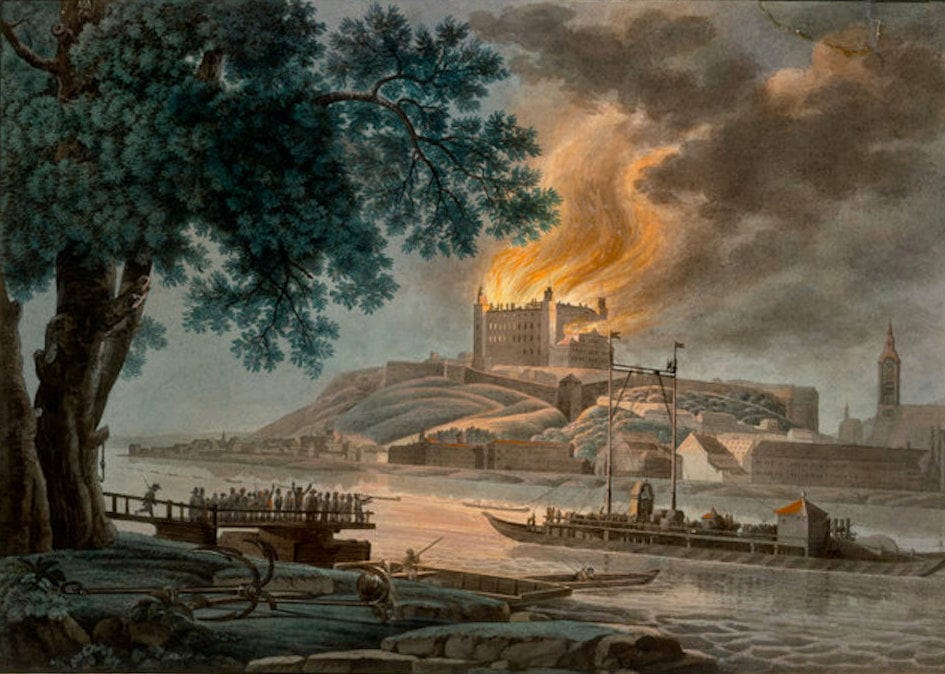
To answer Adolf’s question; it was a ruin because some hapless Habsburg soldiers accidentally set fire to it in 1811. No-one had repaired it since.
For much of the following 150 years, Bratislava Castle remained roofless. A burnt out, blackened shell.
A few weeks before Hitler’s visit, this stretch of Danube embankment - bristling with bunkers, machine gun nests and anti-tank barriers - had been the municipality of Petržalka, just across the river from Bratislava.
But then came the Munich Agreement of September 30, 1938.
Petržalka and its surroundings weren’t covered by the agreement, which mostly concerned the Sudetenland. But Hitler insisted on seizing it anyway. It was highly strategic. Literally a bridgehead.
On October 10, German troops marched in. Czechoslovakia was weakened, abandoned by its allies, in no position to resist. Petržalka was formally incorporated into the Reich, and reverted to its pre-1918 German name of Engerau.
Hitler was impressed by the bunkers. Bunkers the Czechoslovaks had built to protect themselves from the Germans. Bunkers he would no longer need to take by force.
Within another six months Czechoslovakia would no longer exist. Bohemia and Moravia became a Nazi protectorate. Sub-Carpathian Ruthenia was annexed by Hungary. Slovakia emerged as a Nazi vassal state. As well as a willing accomplice in the Holocaust.


I love Bratislava.
Not in the way Hitler loved Bratislava. I have no desire to annex its streets and subjugate its people.
I love Bratislava because it’s the quintessential Central European city. It has a castle. It has trams. It has cobblestones.
It has cafés with pastries you can’t quite pronounce. It has a bewilderingly multicultural, multiethnic, multilingual history. For a start it has at least four names.
To the Slovaks it is Bratislava (but Prešporok before 1919).
To the Germans - who made up the majority of the population until the end of the 19th century - it is Pressburg.
To the Hungarians - who crowned their kings here for three centuries after the Ottomans captured Buda - it is Pozsony.
To the Jews … we don’t talk about the Jews. Well we will, in a minute.
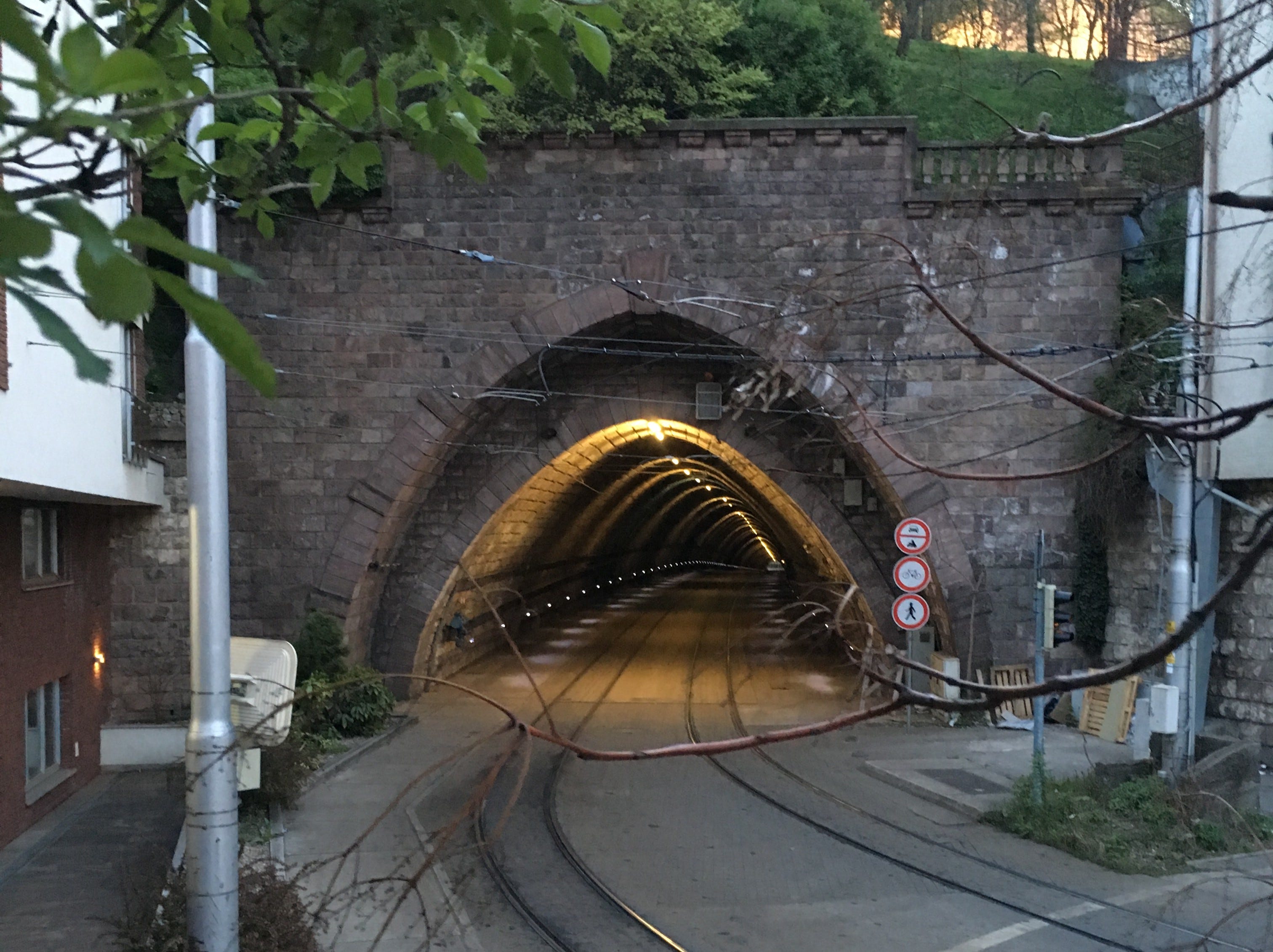
If I had to choose one location to embody Central Europe in all of its dark complexity, it would be the intersection of Zámocká (Castle) and Židovská (Jewish) streets, just by the Ibis hotel.
You can stand here and watch the red trams trundle round a bend and disappear into the tunnel beneath the castle.
Work on what was originally conceived as a road tunnel began in 1943, when Bratislava was the capital of the clero-fascist Slovak State. It was completed after the war, and repurposed as a tram tunnel in the 1980s.
Take a tram through the tunnel and you’ll find yourself emerging near the Chatam Sófer Memorial, formerly the Old Jewish Cemetery, which was mostly destroyed in the construction work.
Slovakia’s wartime fascist leader Jozef Tiso relented and allowed a small fraction of the cemetery to survive. It contained the graves of prominent Orthodox rabbis, which the authorities had encased in concrete. They included Moshe Sófer, chief rabbi of Pressburg from 1806.
Monsignor Tiso showed no such pity for Slovakia’s 90,000 Jews, most of whom were deported to the camps. Slovakia was the only European country which paid the Nazis (500 Reichsmark each) to take away their Jews, on condition they never came back.
Around 71,000 were murdered in the Holocaust.
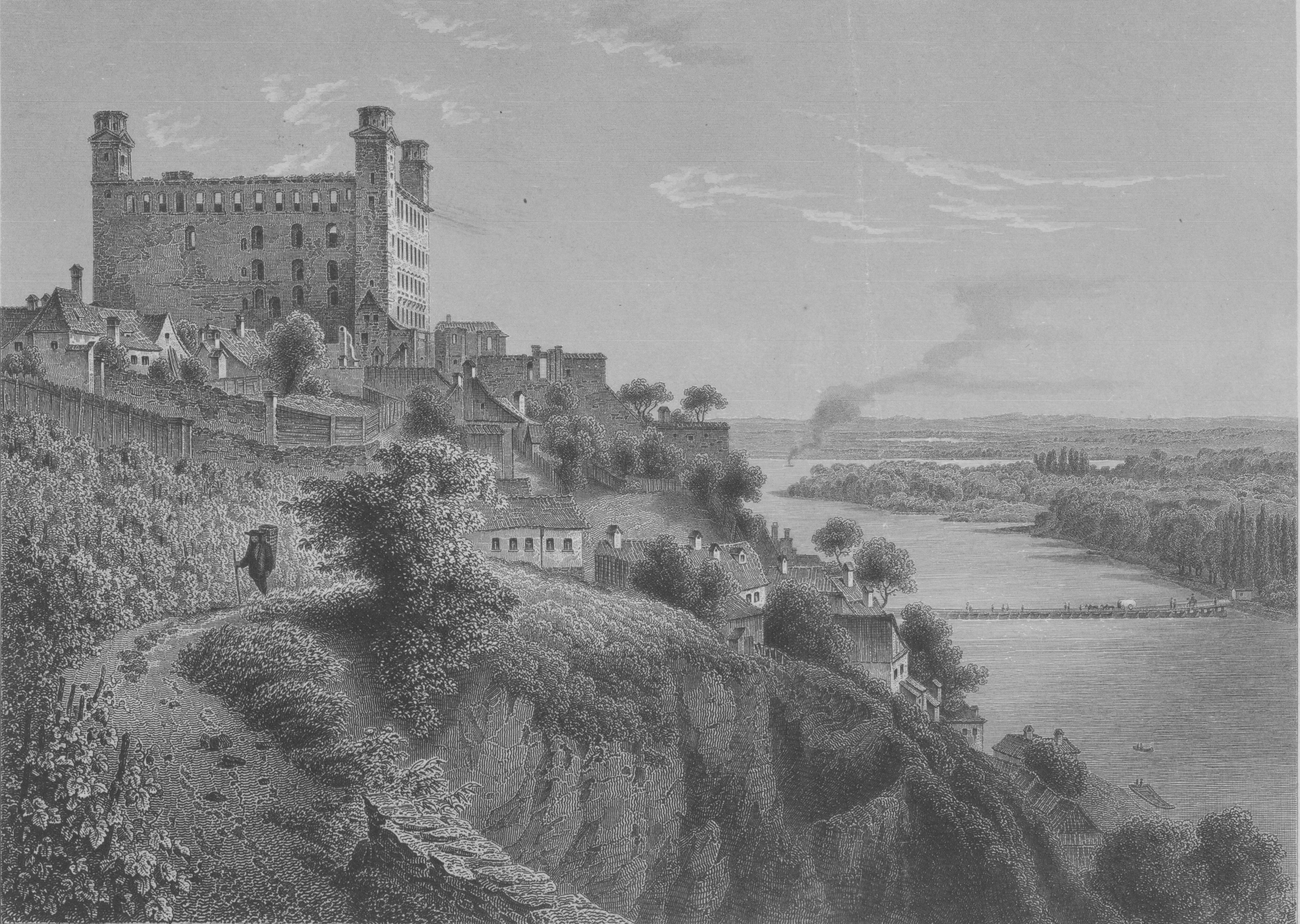
From the Chatam Sófer memorial you can follow in the footsteps of 1930s explorer Patrick Leigh Fermor, who passed through Bratislava in December 1933 during his walk from the Hook of Holland to Constantinople, later described in his book A Time of Gifts.
He writes about approaching the city along the Danube and wandering through the lanes and embankments below the castle hill. He encountered prostitutes operating in the shadows near the river and the steep streets beneath the fortifications.
It is about the most evocative description of Bratislava in English as you can find. I think about it each time I find myself doing the same (wandering the lanes, not encountering prostitutes).
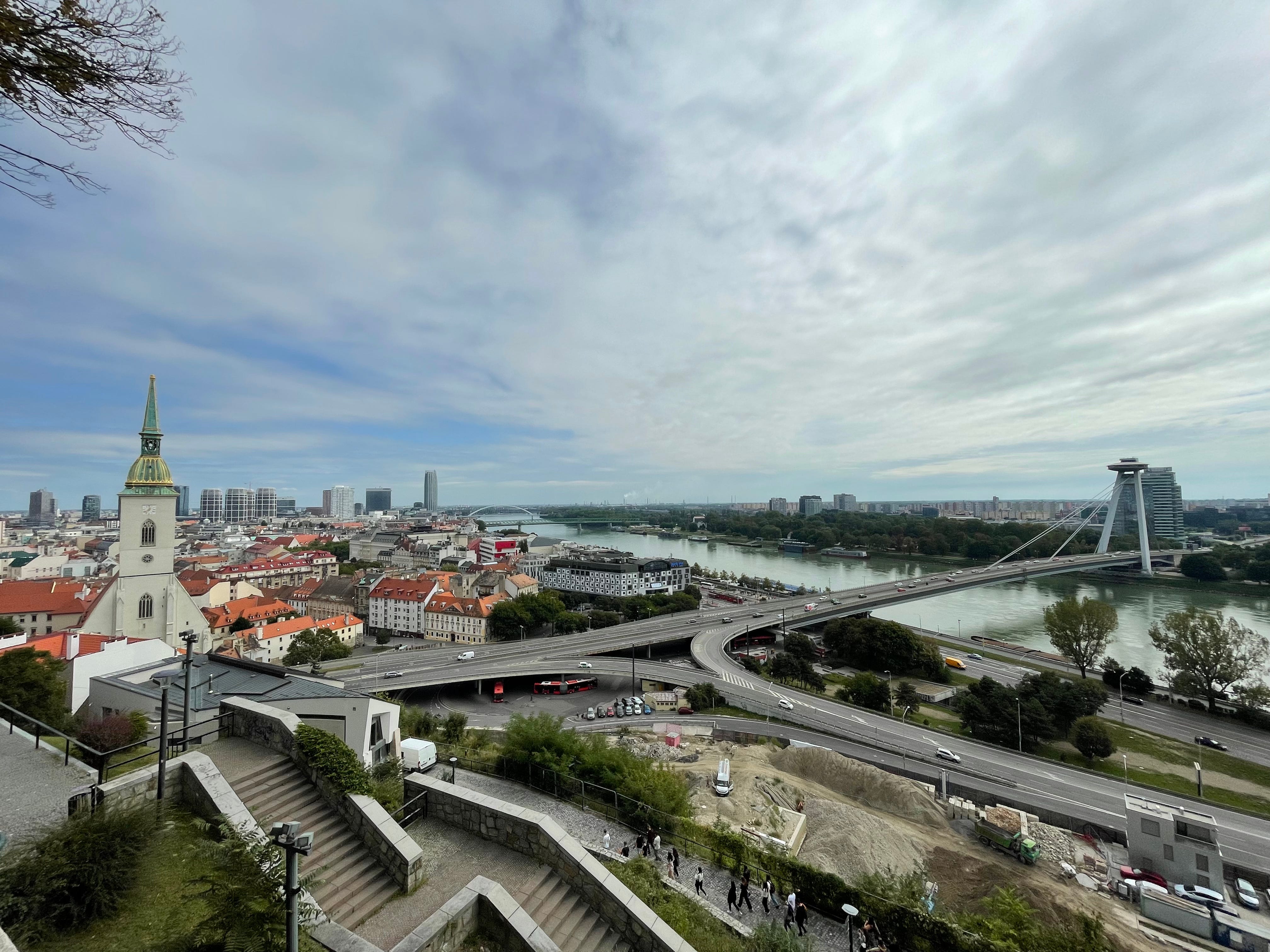
Today, much of this is forgotten, paved over, redeveloped, rebuilt. The castle now gleams after a thorough restoration project. But enough remains of the city that Paddy Leigh Fermor walked through and Hitler gazed at greedily from across the Danube.
And there are remnants, reminders everywhere.
Take the non-descript plaque on Židovská street to Imi Lichtenfeld, who devised a new style of street fighting to defend Bratislava’s Jewish districts from anti-Semitic mobs in the 1930s.
Lichtenfeld managed to flee to Palestine in 1940, and later taught the method to members of the fledgling Israeli Defence Force.
He named it Krav Maga, Hebrew for ‘contact combat’.
Across the busy highway from Židovská, in Rybné námestie, is the site of what had been the Neolog (the reform faction of Hungarian Judaism) Synagogue.
The synagogue survived the war but was demolished by the Communists in 1969 to make way for the approach road to the space-age SNP bridge, a project that sliced the Old Town in two and took many of its ancient buildings with it. They included much of what had been the Jewish ghetto below the castle.
The Neolog Synagogue is just visible in an aerial photo of Bratislava Castle taken around 1961 during restoration work, a few doors down from the far larger St Martin’s Cathedral (where those Hungarian kings were crowned).
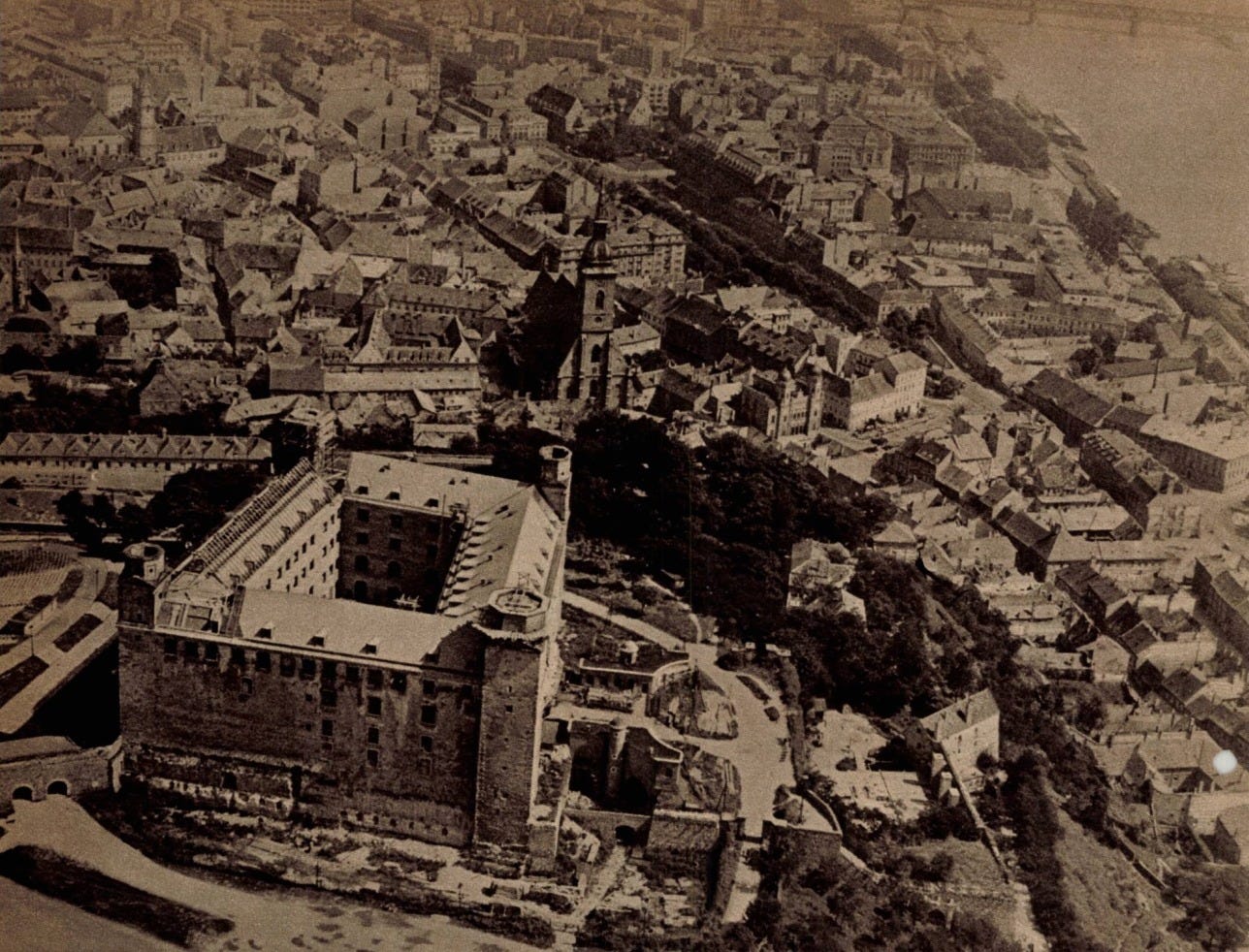
Today, there is a sombre monument reminding visitors of the synagogue and Bratislava’s vanished Jewish community. But there are also numerous bridges to take you across the Danube, not just the UFO-like SNP.
Štefánik Bridge - the one Hitler is apparently looking at in the photo - was blown up by the retreating Wehrmacht in 1945. Rebuilt by German prisoners of war, it was renamed Red Army Bridge. Today it is simply Starý most, or Old Bridge.
Cross it and you’ll find Engerau has reverted to Petržalka, now home to one of the biggest concrete housing estates in the former Communist bloc. These days it’s just a district of Bratislava.
It’s not as grim as it sounds - the Danube is lined with trees and tranquil meadows. I went for a jog once and ended up in Austria. It’s literally twenty minutes down the path.
You can even visit the surviving bunkers, several of which have been lovingly restored.
The same bunkers that failed to save Czechoslovakia (and its Jews) from Hitler. The man who stood on the banks of the Danube, staring at the country he was determined to destroy.
Thank you for your love letter to my hometown. It is fascinating geographically, ethnically, culturally when one is willing to learn history and facts. Because its history was often simplified, selective, written from a particular angle. It was built by Germans/Austrians, Hungarians, Slovaks, Jews. But it was settled by Celts, Romans, Slavs. In the first three centuries of the first millenium, in what is now Austria, there was a Roman City of Carnuntum, just 24 kilometers from today’s Bratislava. It was a city of 50 000 people, with amphitheaters, spa, central heating in the houses and migrants from all parts of the Roman Empire. It fascinates me.
"I love Bratislava.
Not in the way Hitler loved Bratislava. I have no desire to annex its streets and subjugate its people. "
I think this might be my favourite ever disclaimer.