

Sudetenland
Sudeten Germans gather on Czech soil for the first time since the post-war expulsions

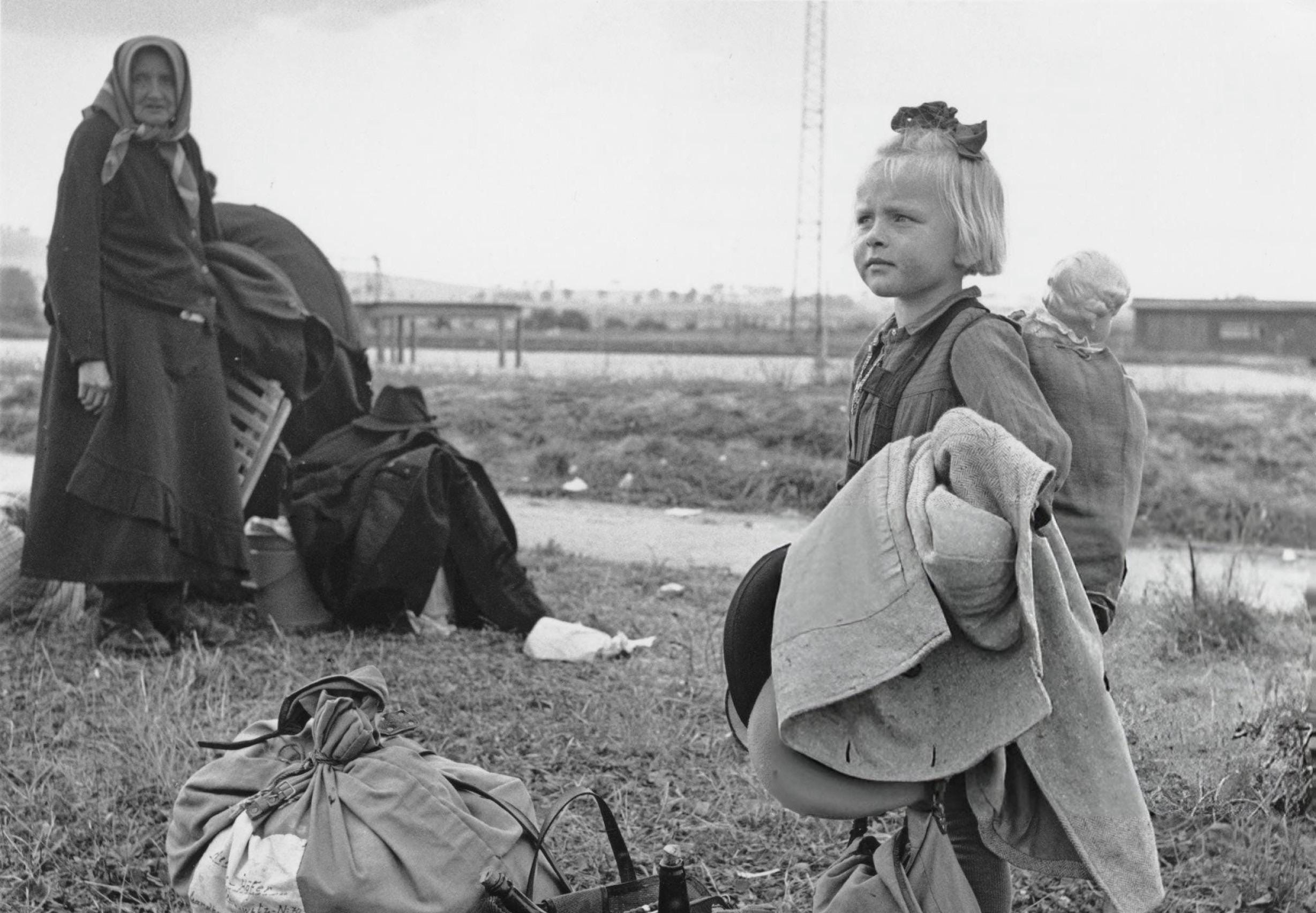
The first gathering of Sudeten Germans in the Czech Republic since the Second World War will go ahead this weekend, as part of the Meeting Brno festival of reconciliation.
Organisers have shrugged off the howls of outrage from far-right politicians, a parliamentary resolution condemning the gathering and a cool reception from the prime minister, who described the meeting as ‘unfortunate’.
Instead, the Sudetendeutsche Tag, an annual meeting of Sudeten Germans and their descendants, will take place on Czech soil for the first time since they were expelled en masse after the war.
I started my journalism career in 1997.
It was the year Václav Klaus and Helmut Kohl signed the Czech-German Declaration, designed to put the painful past behind them. It was a big deal.
I knew almost nothing about the Sudeten Germans. I remember wading through reams of newspaper articles and poring over old maps trying to learn more about them.
For a start, the name was confusing.
Look on a modern relief map and you’ll find the Sudety, or Sudeten Mountains, running along the northern Czech border with Poland, roughly from the Krkonoše down to the Jeseníky.
But that’s geography.
The Sudetenland as a political term encapsulated the entire German-speaking borderland of Czechoslovakia, from Cheb (Eger) in western Bohemia to Znojmo (Znaim) in southern Moravia.
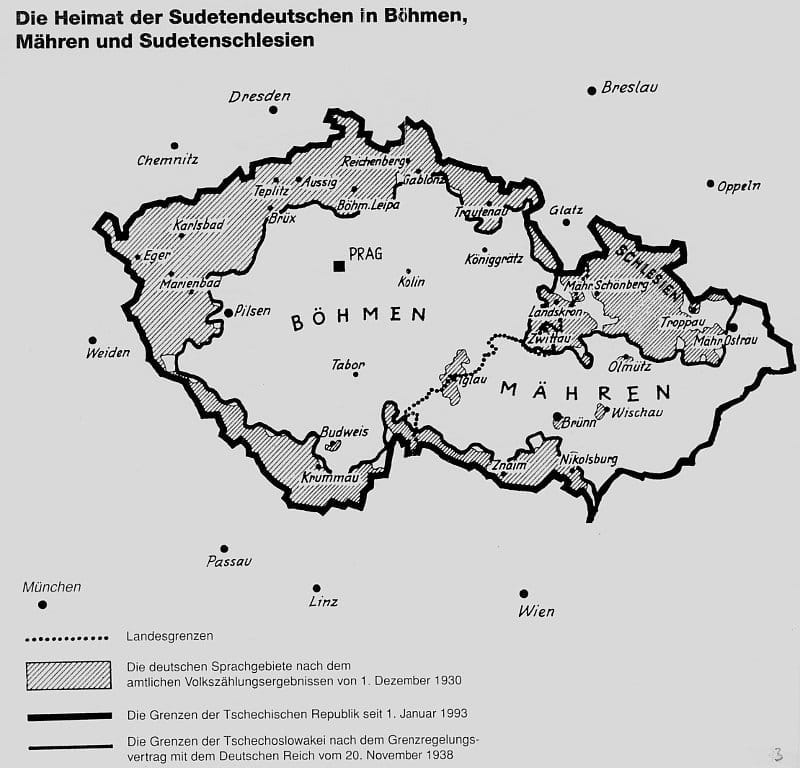
In 2007, I spent three weeks retracing the contours of this lost realm. A friend and I took a succession of very slow local diesel trains from Aš, on the western tip of Bohemia, to Zlín, in the far southeast of Moravia, and then back again.
It was for a book that sadly never got written.
But what I’m left with are a few dozen evocative photos and a prevailing sense of emptiness, as we trudged through towns and villages whose inhabitants had been marched out of their homes and sent packing.
Much has been done to revive these towns, even in the twenty years since we took that train trip. But you can still feel that emptiness. I suppose that’s what happens when you remove three million people from your population.
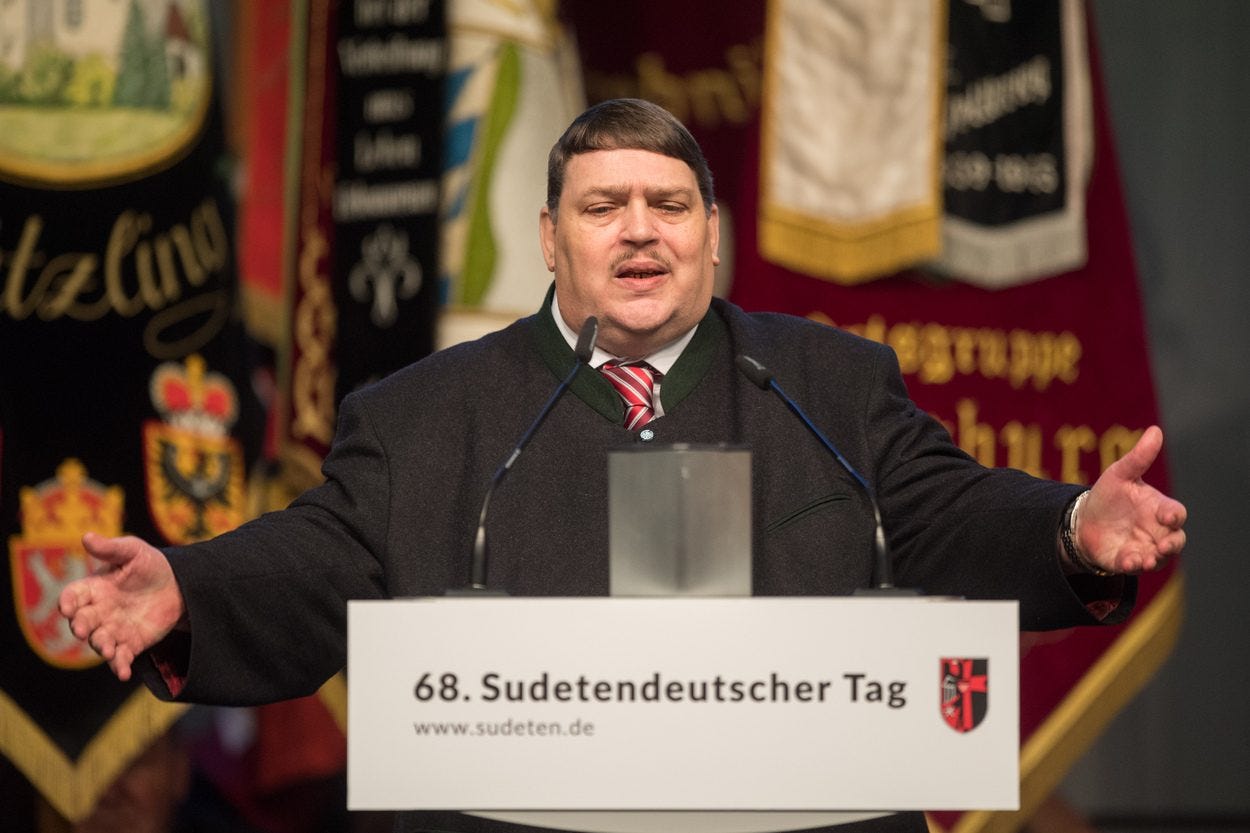
The leader of the main Sudeten German organisation, the Sudetendeutsche Landsmannschaft, was - and still is - Bernd Posselt.
If you were looking for a more comic book villain for the Czech nationalist lobby you’d be hard pressed to find one. With his, um, extremely Bavarian moustache and Kohl-size suits, he makes a striking impression.
But the man I spoke to on the phone last week was eloquent, reasoned, impassioned.
“I think that at a time when war and nationalism are growing worldwide, this meeting between us and our Czech friends is very important,” Bernd told me, for a DW article.
“It shows that we, as Europeans and Central Europeans, have learned from history - including us as Sudeten Germans.”
Bernd Posselt’s family came from the glassmaking town of Jablonec nad Nisou - Gablonz an der Neiße - in the Jizera Mountains. His grandfather made “very beautiful boxes” for this glassware. He had run a successful factory there in the 1920s. Before the Sudeten crisis and the collapse into Nazism.
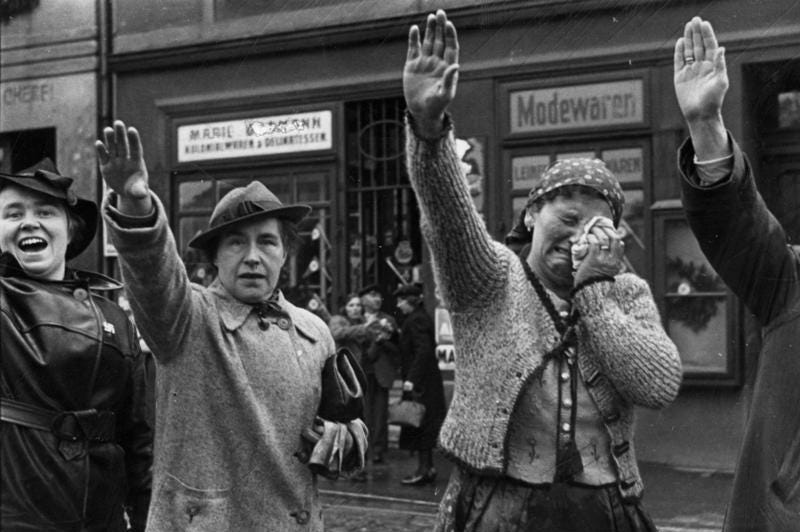
There’s no sugar-coating the role played by Sudeten Germans in the destruction of Czechoslovakia.
In the country’s last democratic elections in 1935, around two-thirds of ethnic Germans voted for the pro-Nazi Sudetendeutsche Partei, which demanded the predominantly German-speaking borderlands be absorbed into the Reich.
“Lieber Führer, mach uns frei von der Tschechoslowakei!” the crowds chanted in 1938 as the Munich crisis deepened.
They would get their wish. Weeks later, Hitler was welcomed in many Sudeten towns as a liberator.
But when the war finished, the retribution for the brutal Nazi occupation of Czechoslovakia was terrible.
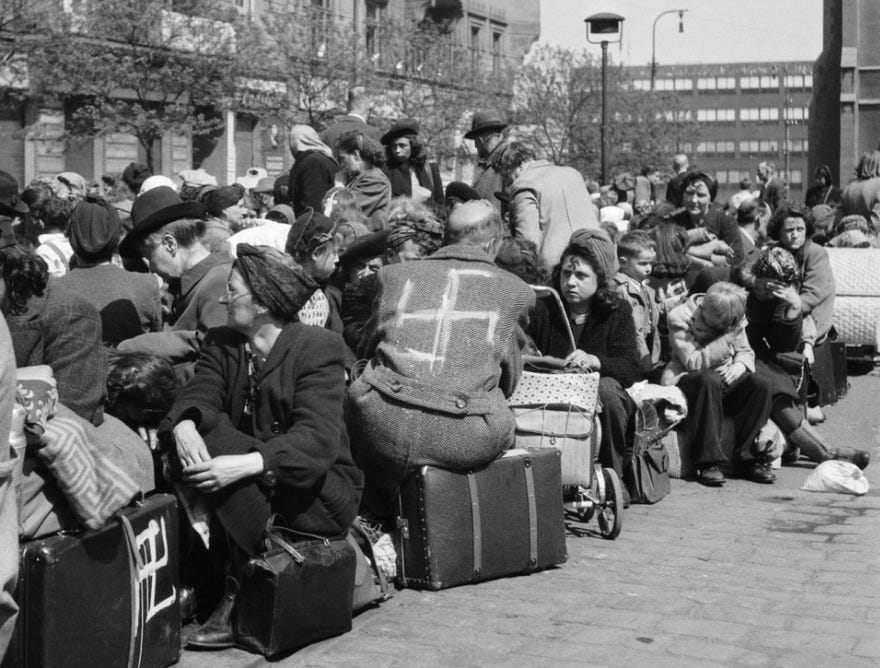
Around three million German speakers either fled or were expelled, often with great violence and cruelty.
Historians estimate that between 15,000 and 30,000 ethnic Germans died during the expulsions through mistreatment, disease and suicide.
Hundreds of German men, women and children were massacred, some by marauding militias, others by the organs of the reconstituted Czechoslovak state.
The expulsions, which had been given the green light by the Allies early in the war, were formally approved at the 1945 Potsdam Conference. Decrees signed by President Beneš included a provision that meant the excesses could never be punished.
Czech historians point out that by 1945 the German-speaking population of Czechoslovakia had been swelled by those who had come to work for the Nazi occupation authorities, along with their families.
As the war drew to a close the population was further bolstered by the so-called Volksdeutsche refugees evacuated from territories liberated or occupied by the advancing Red Army.
But many terrible things happened here between 1945 and 1946. And eight centuries of Czech-German cohabitation came to an end.
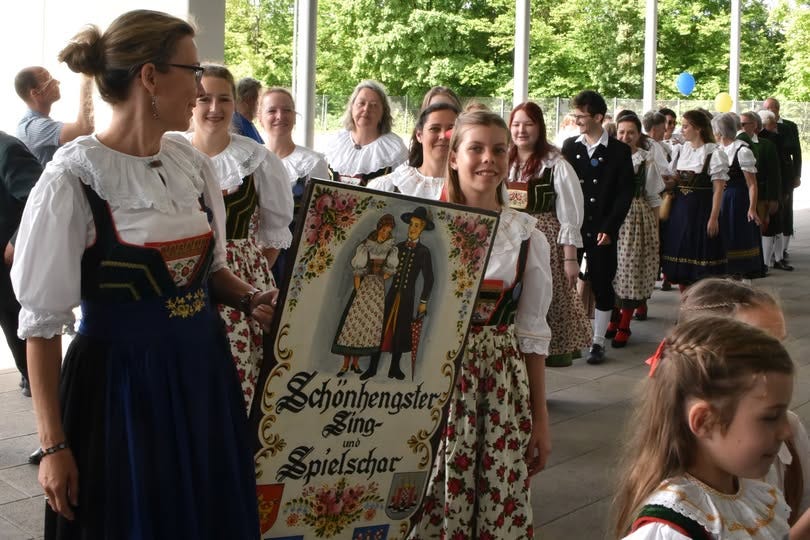
Eighty-one years on, Sudeten Germans - now elderly of course - and their descendants will gather in Brno, scene of a notorious 1945 death march.
They will not demand their property back or that the Beneš decrees be rescinded. Mainstream Sudeten German organisations have long given up these demands.
What they will do is dress in the folk costumes of their Alte Heimat. They will hold aloft signs with the German names of the towns they were forced to abandon. They will play the music of their lost homeland.
But this time they will do this not in a sports hall in Munich or an arena in Regensburg but the Exhibition Grounds in the Moravian metropolis of Brno.
They have already met Holocaust survivors, and will attend a Holy Mass of reconciliation. Czechs of all ages will be in attendance. President Pavel has taken the Meeting Brno festival under his auspices.
It’s difficult to argue with any of that. But history is complicated. And historical truth is important.
Writing this article I remembered an interview I did in 2006 with a man called William Teltscher, in the South Moravian town of Mikulov.
William, who was Jewish, had been forced to flee Mikulov as a boy in 1938. He later settled in England.
He’d returned to Mikulov to attend an event marking the anniversary of the foundation of the town’s Jewish Museum - his father had been the founder.
As he shared his recollections of life in Mikulov in the years leading up to the war, something he said stayed with me.
“One thing which troubles me slightly are these efforts to create a myth of the idyllic coexistence of the Jews and ethnic Germans,” William said.
“In my generation this did not apply. From 1933 onwards things got progressively worse and worse,” he told me.
“I think it was a German historian - Leopold von Ranke - who said ‘write history as it is true’. And this is not true.”
William was 83 then and I presume he’s dead now. I wonder - genuinely - what he would think of this weekend.
Perhaps he’d approve. It’s impossible to know.
Czechoslovakia was deeply scarred by war and occupation. Walking the streets of Czech and Slovak cities is a lesson in 20th century history. Bratislava - capital of the Nazi vassal Slovak State - is a particularly good example:
To the castle

Adolf Hitler stood on the banks of the Danube, gazing at a roofless Bratislava Castle.
On a Southern Bohemian holiday a few years ago, that sense of a landscape abandoned, and almost frozen in time, seemed especially present in the rural area bordering Austria.
I came across a German-language poem dated 1936, praising the beauty of the Böhmerwald/Bohemian forest and the Heimat, in the little abandoned chapel on the hill above the village of Malšín/Malsching. The German text is here: https://meinboehmerwald.de/malsching-malcin/
On the topic of multi-layered Czech(oslovak) Sudeten relationships is "must read" Majewski´s "trilogy":
Sudetští Němci 1848–1948 /// Jenom ať si nemyslí, že jsme kolaboranti /// Kdy vypukne válka? 1938