

The company that controlled everything
Baťa built a global shoe empire. He also told his workers how to live.

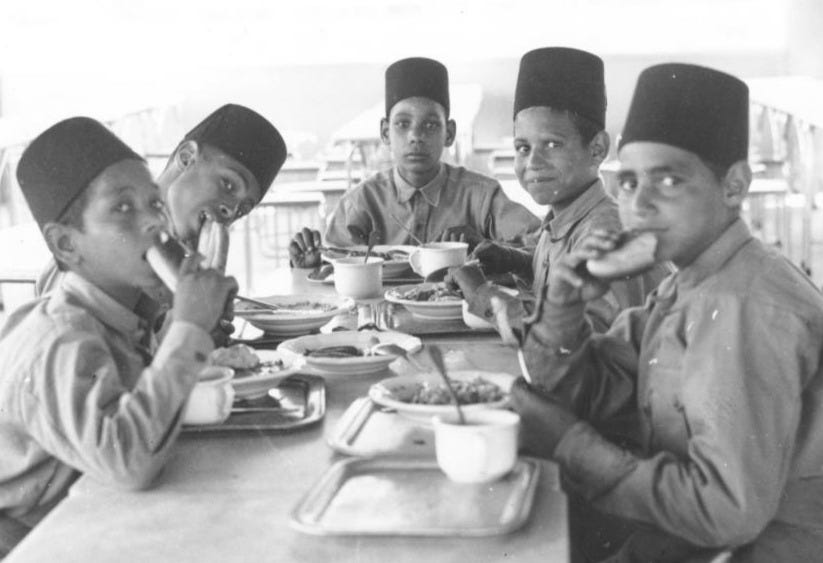
Tomáš Baťa didn’t just build a company. He built a system designed to shape how employees lived, worked, saved, relaxed and thought.
By the 1930s, Baťa was organising housing, education, healthcare and daily life for tens of thousands of people.
It was efficient, successful – and left little room for individual choice.
There are micromanagers, perfectionists and control freaks.
And then there’s Tomáš Baťa.
Gazing from the window of his functionalist villa, it’s easy to imagine him peering through his binoculars at the red brick factory buildings across the river. And making early morning phone calls to his long-suffering employees.
“Nováček! Why’s there so much steam coming out of Building 3?”
“Topol! What are those pallets still doing outside Building 4?”
He was, it seems, a man of relentless vigour with an eye for perfection. I imagine he was a nightmare to work for. Yet the factory he founded here in the South Moravian town of Zlín grew into the largest shoe manufacturing enterprise in the world.
And not just that.
Baťa created an economic and social doctrine that cherry-picked the best ideas of the early 20th century. It was a globalised social business model decades before those words even entered the common lexicon.
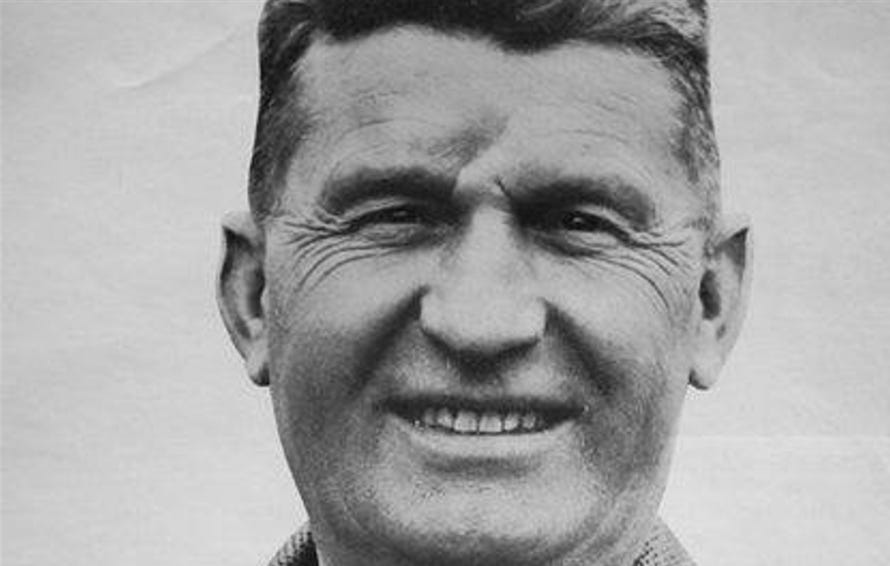
Next week - April 3 - marks the 150th anniversary of Baťa’s birth.
When he died in 1932 at the age of 56, Baťa was a man at the peak of his powers. Handsome, square-jawed, with a thick head of hair, he oversaw a worldwide manufacturing operation that produced more than 35 million pairs of shoes a year.
The company sold affordable, fashionable, well-made footwear at a time when good shoes were luxury items.
Thanks to his diligence, drive and innovation, Czechoslovakia had became the biggest shoe exporter in the world.
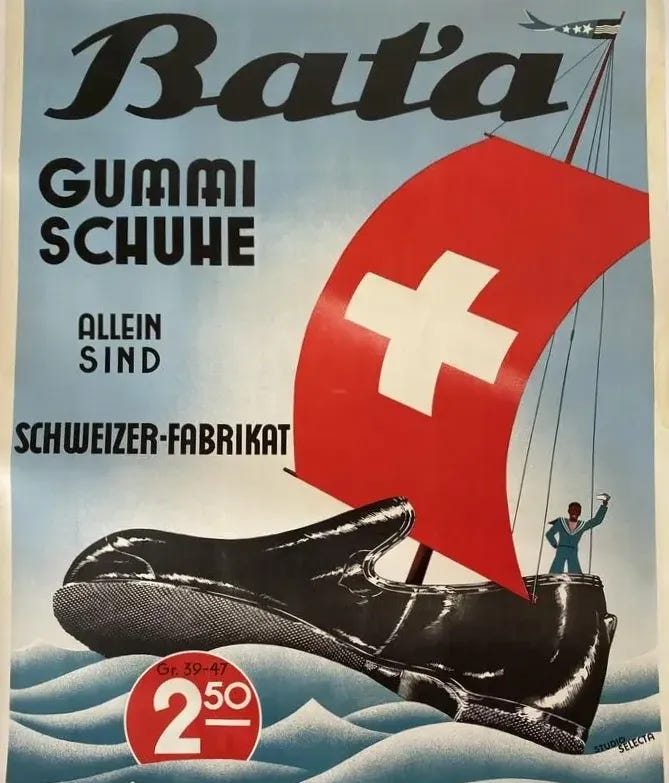
There were 1,825 Baťa outlets in Czechoslovakia alone (today there are 46 in the Czech Republic and eight in Slovakia) and another 660 across the globe. There were Baťa shops and Baťa factories from Switzerland to Singapore.
There were Baťa tanneries. Baťa engineering works. Baťa rubber plants. Baťa chemical refineries. Baťa power stations. Baťa coal mines. A Baťa film studio. Baťa made bicycles. Baťa made gas masks. Baťa made children’s toys.
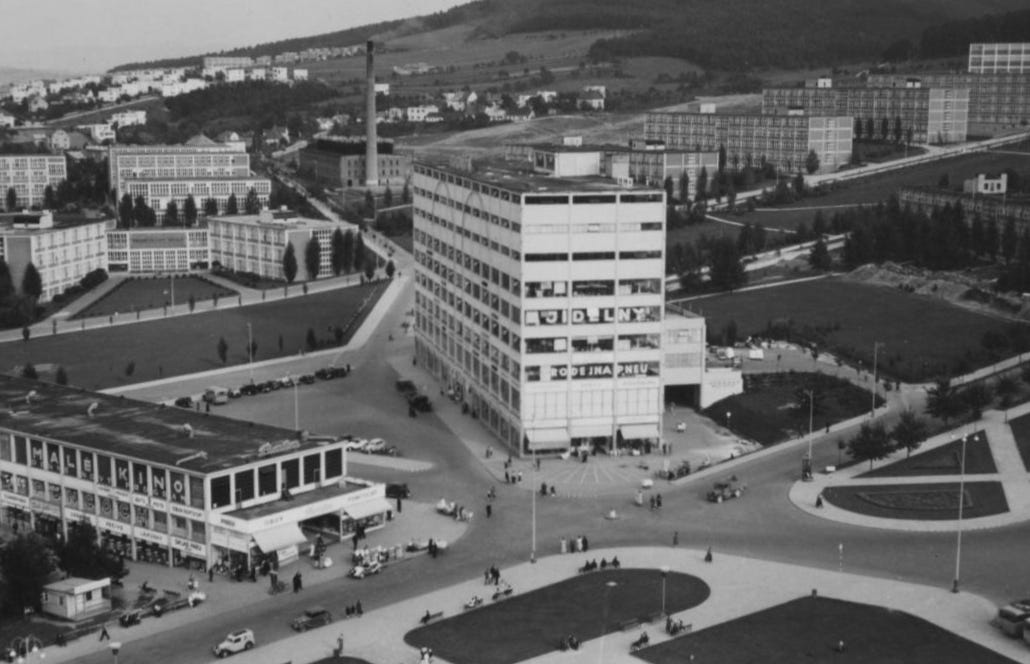
Walking through Zlín today you still get a sense of the scale of his achievements.
The red brick factory buildings, including Czechoslovakia’s first real skyscraper, still dominate the city. You can peer into the lift that his successor transformed into an office (to save time). The road layout is essentially the same.
Baťa’s 30,000 employees enjoyed a standard of living that was the envy of the nation. The company provided housing, healthcare, insurance, education, leisure activities and entertainment — often in breathtakingly modern facilities equipped with the latest high-tech gadgets.
Zlín (Mayor: Tomáš Baťa) had Baťa’-operated railway lines, paper mills and canals. It had its own airport at nearby Otrokovice (where Baťa would die in a plane crash on July 12, 1932).
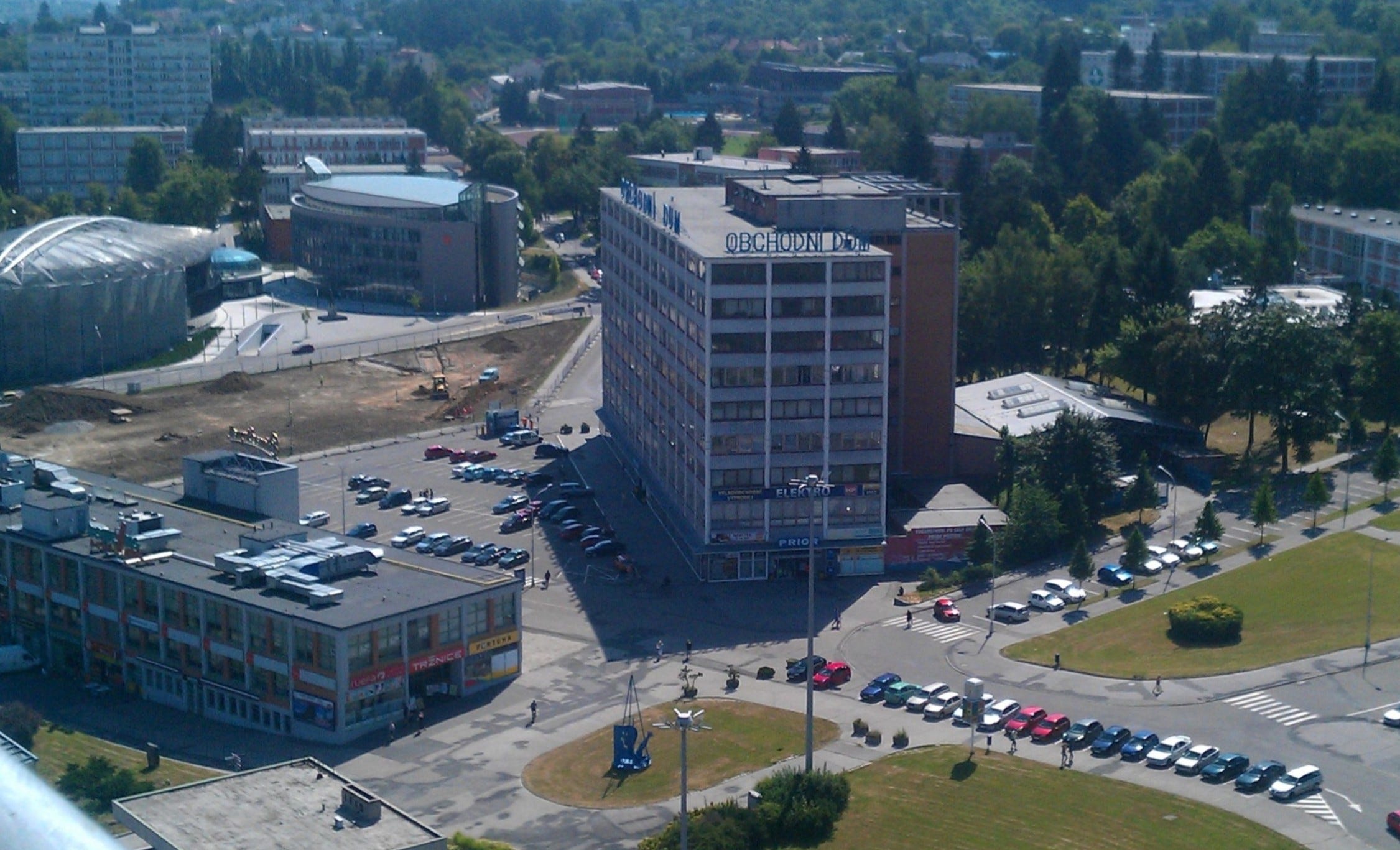
Thousands moved here to live in the large garden districts that Baťa built for its employees. Between 1923 and 1932, their numbers grew from 1,800 to 17,000; the town’s population increased from 5,300 to 26,400.
Baťa employees received their wages via Baťa bank accounts earning 10% interest per year.
Profits and losses were shared in a unique motivational scheme. When an autonomous unit produced good-quality work, on time and on budget, employees were rewarded with bonuses. If the workmanship was shoddy or the designs out of fashion and unsellable, salaries were docked.
‘Most people got used to the system,’ Pavel Velev, director of the Tomáš Baťa Foundation, told me.
‘Those that didn’t, left.’
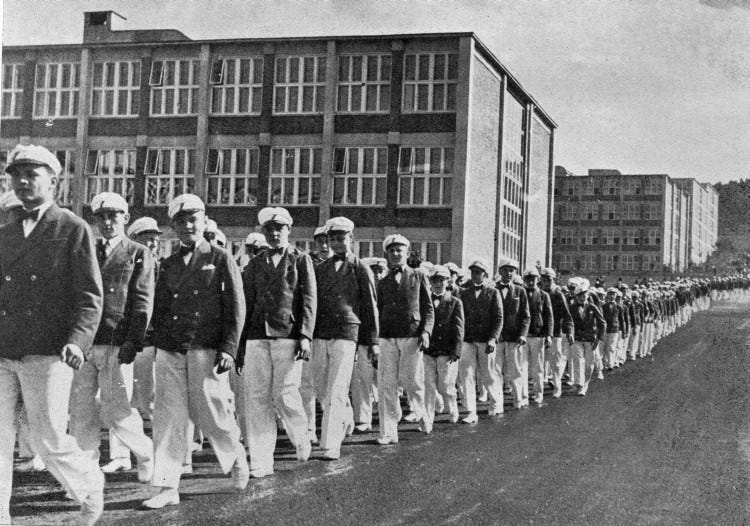
Flush with a substantial disposable income, Baťa workers spent their hard-earned cash in Baťa canteens and Baťa department stores and Baťa cinemas and Baťa swimming pools.
Many bought their little Baťa-built homes; neat, newly built red-brick houses, each with a little garden and the latest in modern conveniences.
They’re still desirable residences to this day.
Baťa was one of the first companies to provide social services and health care for all employees, the first to employ people with disabilities as a matter of policy and the first to introduce a five-day working week of 45 hours.
But workers also lived according to company ‘recommendations’, tenets of Baťa philosophy that guided everything from how much money to put by to when to get married.
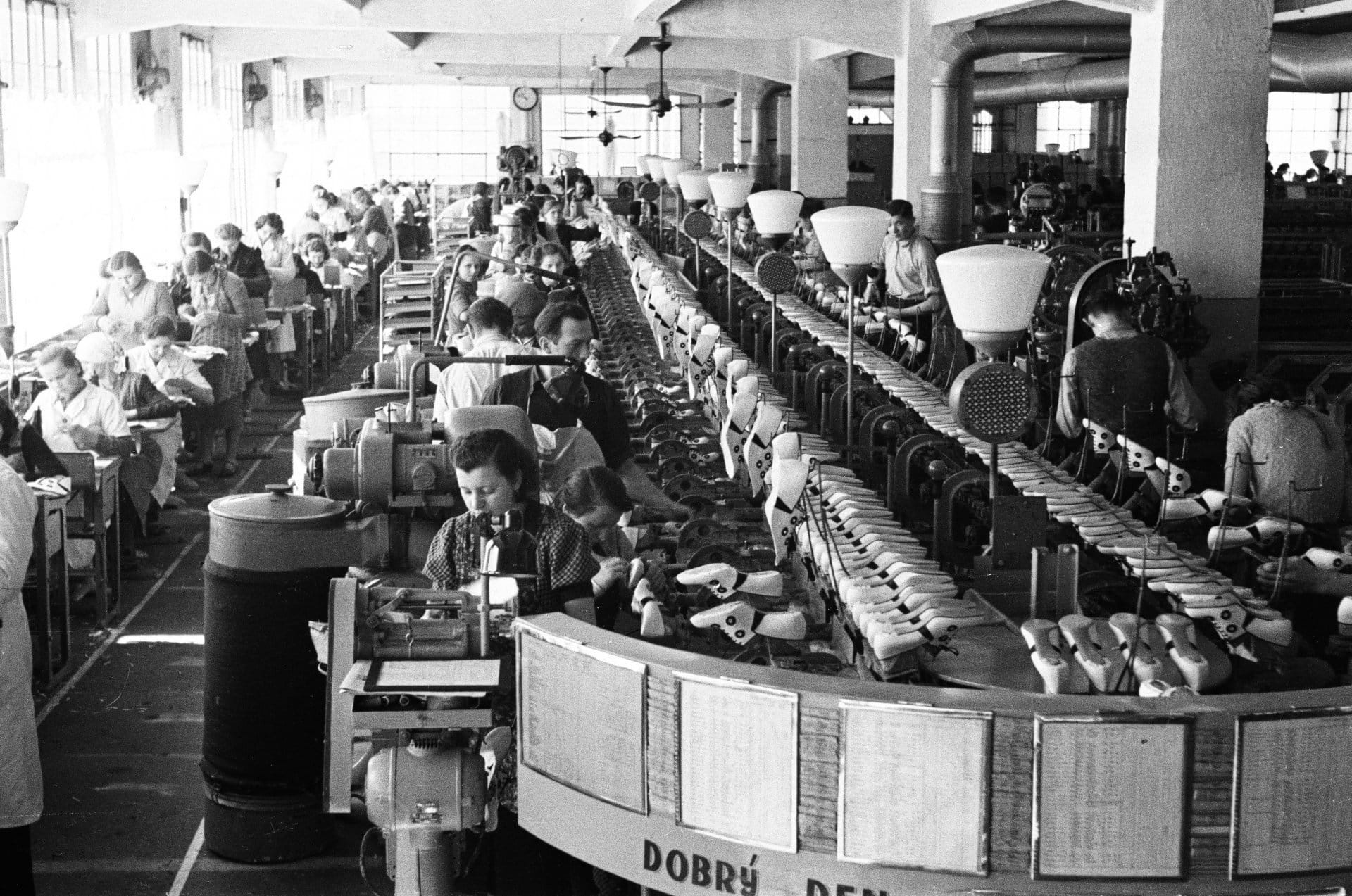
It sounds sinister, even Orwellian to our modern ears. And the Baťa system did have its darker overtones; an employee overheard espousing Marxist ideas on the train, for example, might find himself out of a job the following morning.
But it’s important to place the Baťa vision into the context of an undeveloped rural region in south-east Moravia with few other prospects for gainful employment.
Many were shepherds and peasants who had never even seen a big city before. Overnight they were given the chance to own their own houses and and cars, to travel and educate themselves.


But while Tomáš Baťa built the prototype of a socially-conscious industrial empire, it was his half-brother Jan Antonín Baťa who exported the concept around the globe.
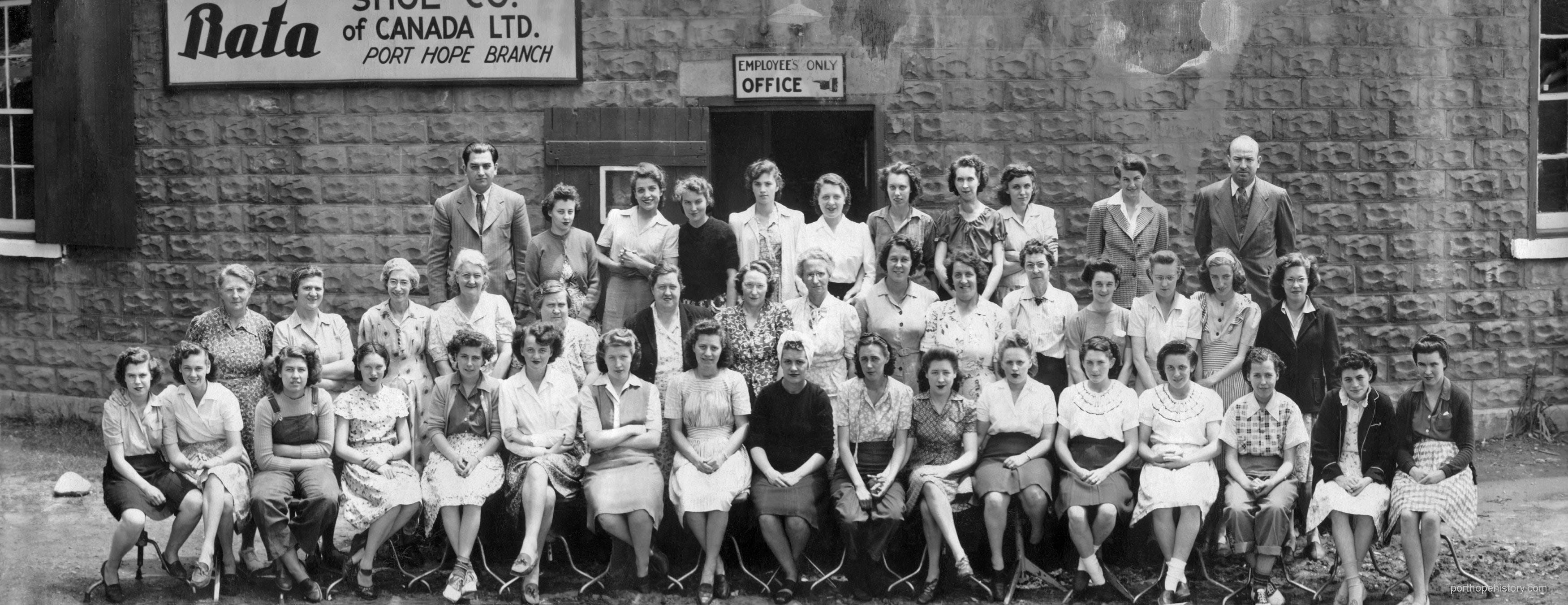
The dozens of ‘Batavilles’ — Batanagar in India, Batapur in Pakistan, Batatuba in Brazil, Batawa in Canada, Batadorp in the Netherlands, Baťovany in Slovakia, Bataville in France and so on - were mostly the work of Antonín, who took over the business after Tomáš’s death.
The war, the Nazi occupation and 1948 were not kind to Baťa. The company was nationalised and renamed Svit (‘Glow’) by Communist central planners. But there was a certain symmetry to the company’s fortunes after 1989.
Tomáš Baťa’s son Thomas Bata Jr, who emigrated to Canada in 1939, kept the Baťa name alive, building a new global shoe empire. Following the fall of Communism, the two strands of the company were reunited.
“Buildings are just heaps of bricks and concrete. Machines, just a lot of iron and steel,” Tomáš Baťa once said.
“What breathes life into them is people.”’
Even though in Baťa’s world, those people were never entirely free of the system that sustained them.
If the Baťa story caught your interest, you might want to explore this account of one of the most opaque and unsettling episodes in postwar Czechoslovak history:
Fascinating article, I had no idea about this history of Bata. Thank you Rob.