

Don't shoot! We're Czechs!
The strange D-Day story Spielberg got right

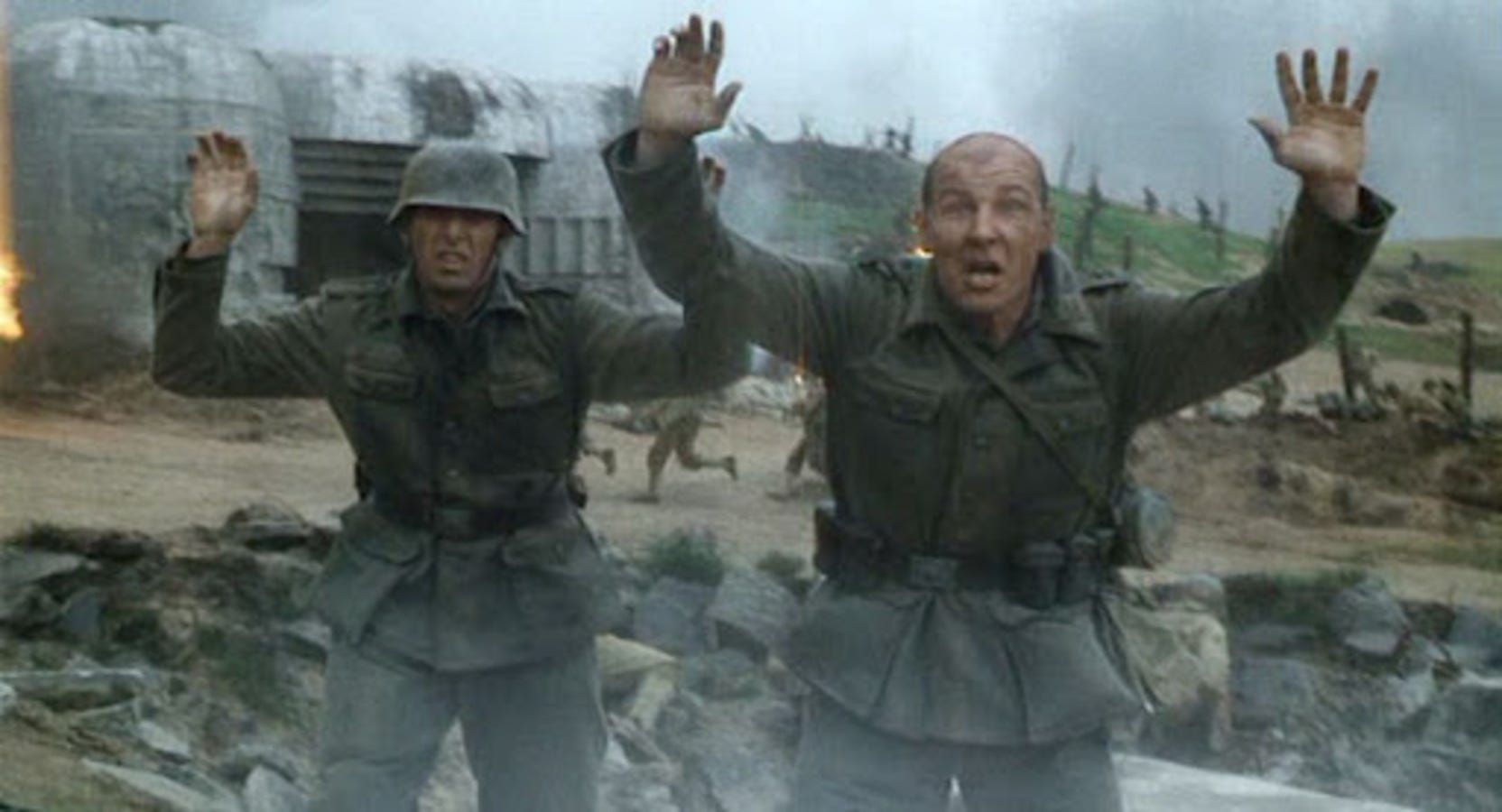
Omaha Beach, June 6, 1944.
Amid the smoke and machine-gun fire, two Wehrmacht soldiers emerge from a trench. They raise their hands over their heads and walk towards the GIs in front of them.
“Nestřílejte! Jsem Čech! (Don’t shoot! I’m Czech!) - one of them shouts in fluent Czech.
“What?” replies one of the two American soldiers, his rifle raised.
“Já jsem nikoho nezabil! Jsem Čech!” (I didn’t kill anybody! I’m Czech!)
“What?” the GI repeats, rifle raised. “I’m sorry. I can’t understand what you’re saying.”
The Americans open fire, killing them instantly.
The scene is barely 10 seconds long, one of countless heart-stopping moments in Spielberg’s WW2 epic Saving Private Ryan.
But for Czech cinemagoers, it prompted instant confusion. It seemed to contradict one of the most basic tenets of the Second World War:
Czechs didn’t fight in the Wehrmacht.
Or did they?
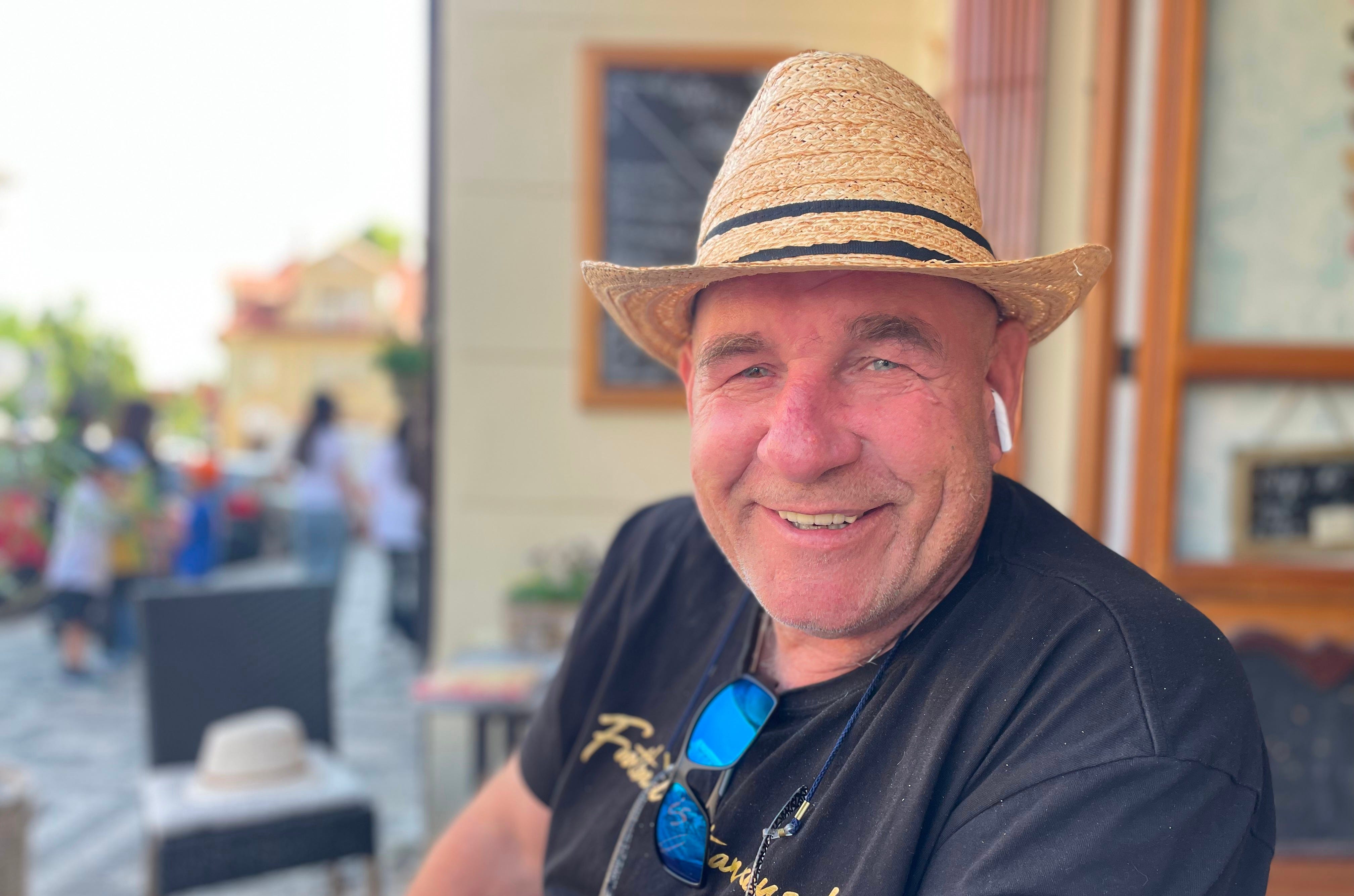
The soldier who implores the GIs not to shoot was portrayed by actor and stuntman Martin Hub, who has an IMDB list as long as your arm. With credits in Titanic, Mission Impossible and Gladiator, he also devotes time to his lifelong passion of painting.
But he’ll never forget those two months in Ireland working on Saving Private Ryan; mostly stunts for battle scenes. Until he was given a speaking role.
“I remember the wardrobe department fitted my uniform and I was told to wait in the actors’ tent. I really didn’t feel like I belonged in there,” Martin told me over coffee.
“Then suddenly somebody tapped me on the shoulder. A small man. He introduced himself: My name’s Steven Spielberg and I’m really pleased to be working with you.”
Martin says he has no idea why Spielberg decided to include the scene.
But historically it’s 100% accurate.
“Absolutely. Not only is it completely plausible, it’s well documented,” said Zdeněk Maršálek, a historian from the Institute for Contemporary History, tucked away in a side street in Prague’s Mala Strana district.
“The Wehrmacht division at Omaha Beach, for example, had many soldiers from precisely these populations - Volksliste men, Poles, Upper Silesians, others from annexed regions,” Zdeněk told me.
It’s unclear exactly where Spielberg’s two Germans were meant to come from. But Zdeněk says a potential candidate is Hlučínsko, the area around the town of Hlučín, in Czech Silesia.
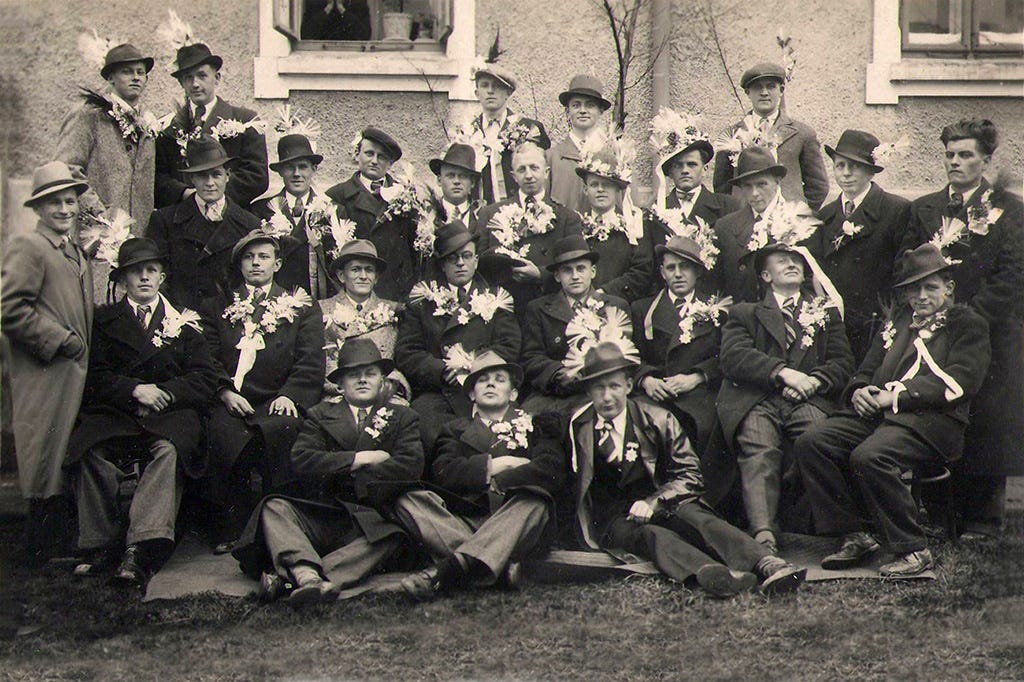
This region just north of Ostrava is commonly called ‘Prajsko’ - a mangling of the German Preußen (Prussia). The Austrian Empress Maria Theresa famously lost the territory to Frederick the Great in the Silesian Wars, and it spent the following two centuries as part of Prussia.
In 1920 it was included in the recently created Czechoslovakia. And there it stayed. Until Hitler.
